
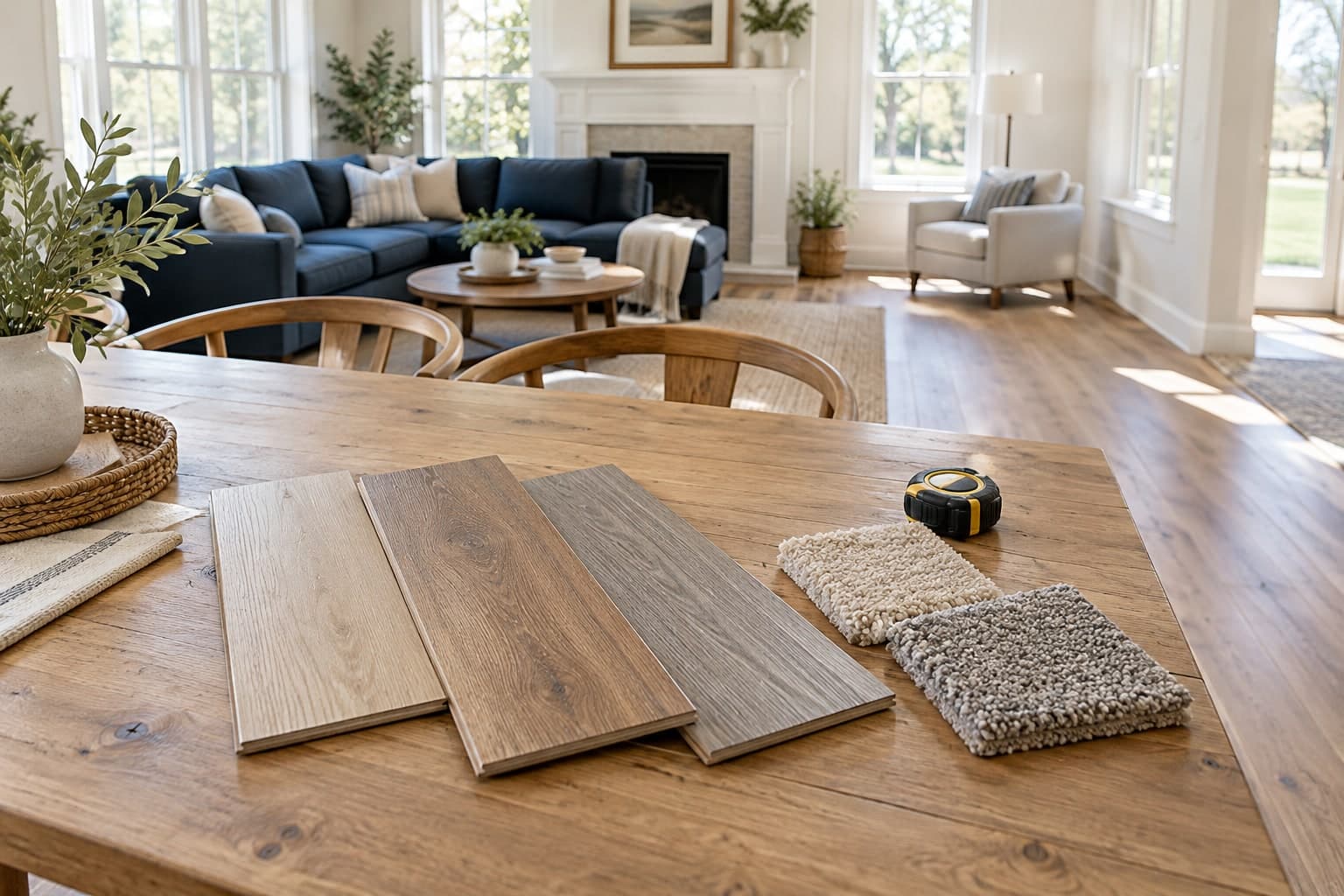
Quick answer
For an initial budget, published national cost guides put flooring and installation at roughly $2–$8 per square foot for carpet, $4–$16 for luxury vinyl plank, $4–$14 for laminate, and $7–$20 for engineered hardwood. These are planning benchmarks—not Behr's prices or measured Minnesota averages. Product quality and the work involved can put your quote below or above these ranges. Confirm removal, preparation, stairs, trim, extra material, and any applicable charges in the written total.
Guide overview
A flooring price per square foot is useful, but it is not the same as the price of a finished room. Two homeowners can choose the same floor and receive different quotes because one room is empty and ready while the other needs carpet removed, furniture moved, or an uneven subfloor corrected.
This guide is for homeowners planning a project in Minnesota, including Behr's South Metro service areas. It uses published national cost benchmarks as a starting point, then shows how to compare the actual work in your home. A measured, written project quote is more useful than any online average.
Planning estimates—not Behr's prices
These broader published ranges help you compare an initial budget across flooring types, from less expensive choices to higher-priced products and installations. They are not a price list, an average Minnesota quote, or a ceiling on what a project can cost. Use the installed column as a starting benchmark for flooring and installation—not a complete replacement-project total. Ask Behr's what fits your budget and rooms.
Swipe the table to compare all columns.
| Flooring | Flooring material only | Flooring + installation benchmark | What to know |
|---|---|---|---|
| Carpet | $1–$5 / sq ft | $2–$8 / sq ft | Confirm the cushion and installation scope; specialty cushions and project extras can add cost. |
| Luxury vinyl plank (LVP) | $2–$10 / sq ft | $4–$16 / sq ft | Product quality and installation method vary; confirm any required underlayment. |
| Laminate | $1–$6 / sq ft | $4–$14 / sq ft | Confirm underlayment and preparation; higher-specification products can cost more. |
| Engineered hardwood | $3–$16 / sq ft | $7–$20 / sq ft | Wide variation by wood, construction, finish, and installation method. |
Do not assume removal/disposal, furniture moving, repairs or leveling, moisture correction, stairs, trim/transitions, extra order quantity, or delivery are included. Source guides and installer packages differ in scope. Confirm cushion or underlayment and any applicable taxes or other charges in your complete written price; Minnesota materials-only sales and installation contracts have different tax treatment, explained below.
About these estimates: carpet, luxury vinyl plank, and laminate ranges follow HomeGuide's published national flooring-cost table; engineered hardwood follows Angi's material and installed ranges. Sources were checked October 9, 2026. They are not standardized bids for the same home, and their included work can differ. Premium products or complex work can exceed the table.
Have a budget in mind? Ask us what's possible. Behr's can help compare flooring options and the complete scope for your rooms before you commit.
What those ranges mean for a room
Multiply the measured floor area by the installed benchmark to get an illustrative starting subtotal. A 12-by-15-foot room has 180 square feet of floor area. That does not mean you should order exactly 180 square feet: cuts, layout, pattern matching, and the product's package size affect the purchase quantity. Carpet roll width and seam layout matter too.
Swipe the table to compare all columns.
| Example space | Flooring example | Illustrative subtotal |
|---|---|---|
| 12 × 15 ft bedroom (180 sq ft) | Carpet | $360–$1,440 |
| 15 × 20 ft living room (300 sq ft) | Luxury vinyl plank (LVP) | $1,200–$4,800 |
| 800 sq ft of connected rooms (800 sq ft) | Laminate | $3,200–$11,200 |
These are arithmetic examples, not completed Behr's jobs or quotes. Subtotals use measured area only. Your written quote must account for purchase quantity, preparation, other project work, and any applicable charges; do not automatically add sales tax to an installed contract. Closets, hallways, stairs, and irregular rooms require their own measurements.
For example, the 300-square-foot vinyl plank subtotal is $1,200–$4,800 before any project-specific additions not already included. Do not count an item twice if it is already part of the package. If a quote is higher, ask what it includes rather than assuming it is overpriced. If it is lower, ask what still needs to be added.
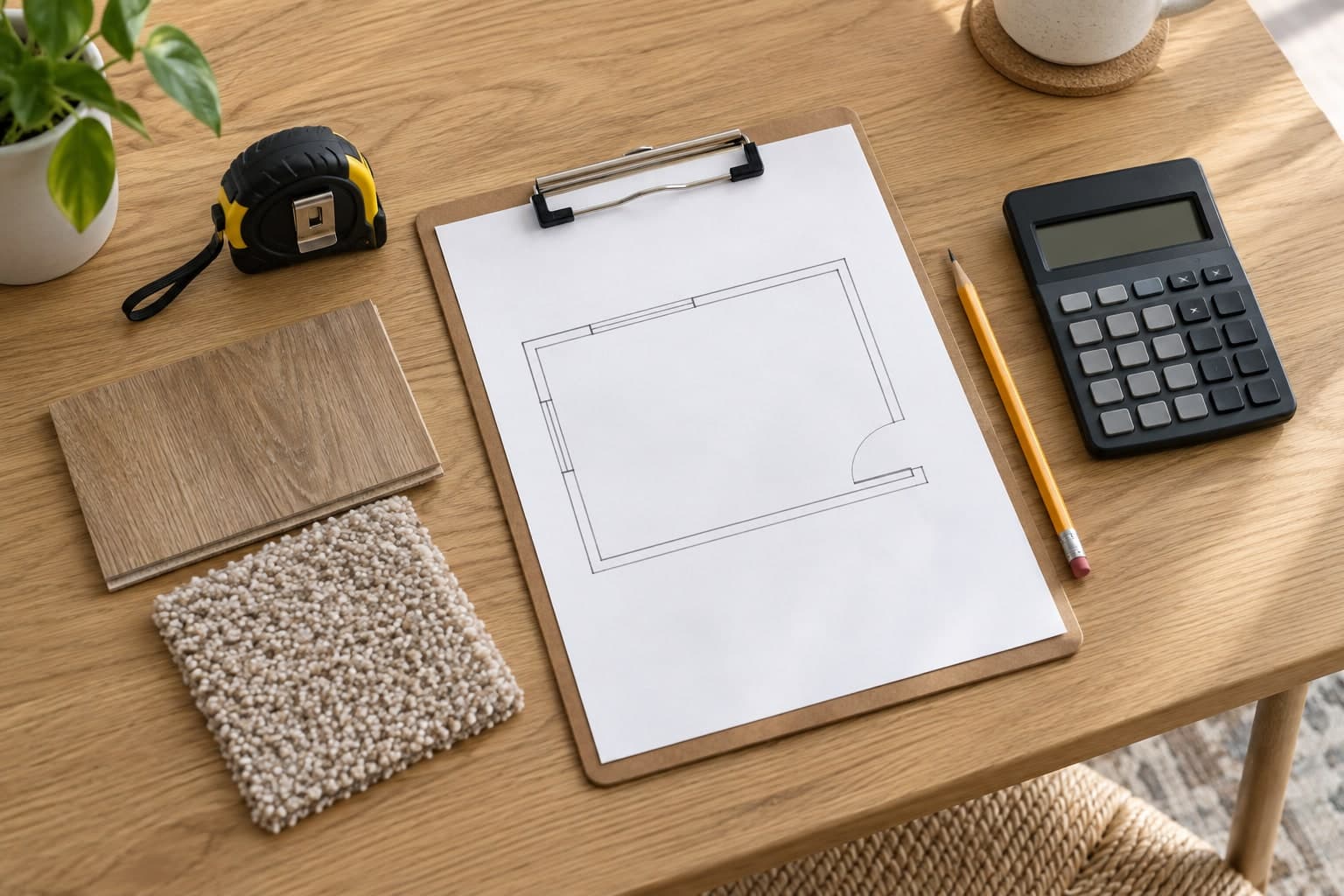
Start with room measurements, then account for the product and full installation scope. AI-generated planning illustration, not a measured project plan.
Planning a flooring budget for a Minnesota home
Start with the rooms, not a statewide price average. A basement over concrete raises different planning questions from an upstairs bedroom or connected main-floor rooms. In an existing home, removing the old floor may reveal preparation work that could not be seen at the first visit. These conditions are not unique to Minnesota, but they matter when budgeting for your home here.
For a basement, ask what moisture checks and product-specific preparation are needed before choosing the floor. For connected rooms, discuss doorways, transitions, closets, and whether changing floor heights will affect the scope. Behr's can bring samples and guidance to your South Metro home; a room-by-room written estimate connects your budget to the actual work instead of assuming national prices describe your project.
Minnesota taxes: materials only versus installed flooring
Minnesota generally taxes a retail flooring-material purchase. When flooring is supplied and installed under a contract to improve real property, the contractor generally pays sales or use tax on the materials rather than adding sales tax to the customer's construction-contract invoice. Tax treatment depends on the transaction: a separate material purchase is not the same as one installed contract.
Ask for the complete written price, including any applicable taxes and other charges. Do not assume that an installed quote needs another sales-tax percentage added on top, or that materials-only prices include tax. Minnesota Revenue illustrates this distinction with carpet sold with installation versus carpet purchased for DIY installation.
Separate the flooring from the rest of the materials
The visible floor is only one part of the material order. Carpet may need a cushion; a plank floor may need an approved underlayment, adhesive, or moisture-control system. Doorways and edges can need transitions and finishing pieces. Ask whether the quote lists these items or includes them in an installation package.
Choose supporting materials for the actual product, not just the cheapest option. The Carpet and Rug Institute advises following the carpet manufacturer's cushion requirements. For wood floors, installation guidance and the manufacturer's requirements matter too. An attached pad does not make every plank product suitable for every room or subfloor.
Installation cost depends on the work, not just the room size
An open, empty room is different from a project with several doorways, closets, stairs, or detailed cuts. Ask which installation method the chosen floor requires and whether stairs, transitions, baseboards, or moving furniture are included. A sale price that says materials only does not include installation unless the offer explicitly says so.
Removal and disposal are worth clarifying early. Behr's can discuss furniture moving, old-floor removal, hauling, and preparation as part of the project scope; do not assume every item is included in every quote. The Carpet and Rug Institute likewise recommends agreeing on removal, disposal, and furniture responsibilities before installation.
The work underneath can change the budget
The new flooring needs an appropriate foundation. Uneven areas, damaged subflooring, or moisture conditions may require attention before installation. Wood-flooring guidance from the National Wood Flooring Association addresses subfloor flatness and moisture; your chosen product's instructions determine the requirements for the actual floor.
Some conditions are visible during an initial visit. Others only become clear when the old floor is removed. Ask how the installer handles newly discovered work: how it will be explained, what the added cost will be, and when you will be asked to approve it. A clear process is more valuable than a vague promise that every project will stay at an advertised square-foot price.
Make the budget work without guessing
Start with the rooms that matter most and explain the total budget you want to work within. Compare products for those rooms, then compare complete quotes—not a premium floor with full preparation against a basic floor with most of the labor missing.
If you are replacing several rooms, ask whether a phased project makes sense and what repeat visits or transitions could change. If you want to handle preparation yourself, agree on the scope with the installer first. Removing flooring or moving materials before that conversation can create extra work or leave out something the installation requires.
A useful budget discussion is not a commitment to buy. Behr's brings samples and guidance to homes in communities such as Eagan, Apple Valley, and Woodbury, so you can compare options in your own light and discuss the actual rooms involved.
Buying flooring without installation—or considering financing?
If you already have an installer or are taking on a DIY project, ask for a materials-only quote. Confirm the product, quantity, compatible accessories, and pickup or delivery arrangements. Installation is separate, and fulfillment or freight depends on the order and destination; a product price alone is not a delivered project total.
Financing may help you plan payments, but it does not make the project less expensive by itself. Review the current program's approval requirements, payment schedule, and terms. Use the complete project quote when deciding what fits your budget.